
New Study Underscores XV Technology’s Power to Detect Hidden Lung Disease
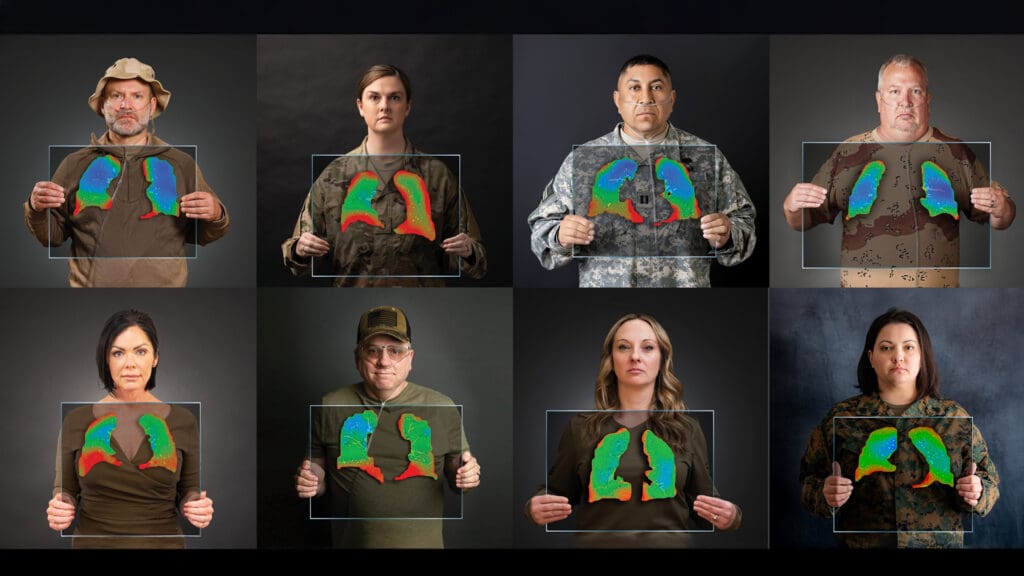
A major new multi-center study published in Respiratory Research (July 2025) demonstrates that 4DMedical’s X-ray Velocimetry Lung Ventilation Analysis Software (XV LVAS®) can reveal early and subtle forms of small airways disease that are often missed by standard tests like spirometry and CT scans. Researchers from Vanderbilt University, Johns Hopkins, University of Miami, and Alfred Hospital in Melbourne showed that XV technology identifies disease-specific and severity-specific biomarker patterns in chronic obstructive pulmonary disease (COPD) and deployment-related constrictive bronchiolitis (DR-CB)—even when conventional tests appear normal.
Innovative XV Technology Shows Promise for Detailed Lung Function Assessment in Bronchiectasis Patients

A new study led by UNSW Sydney researchers demonstrates the feasibility and promise of the innovative XV Scanner™ with XV LVAS®, non-invasive imaging tools developed by 4DMedical, for assessing regional lung function in adults with bronchiectasis caused by Primary Ciliary Dyskinesia (PCD) and other conditions.
Understanding Lung Perfusion: What is it? Why does it matter? And how is it measured?

Lung health is essential for overall wellbeing. A key aspect of healthy lungs is their ability to efficiently transfer oxygen into the blood. This process relies on both the flow of air (ventilation) and the flow of blood (perfusion) through the lungs. While ventilation is about how well air moves in and out, perfusion refers to the movement of blood through the lungs’ fine network of blood vessels. Both are crucial, but today we’ll take a closer look at lung perfusion: what it is, when and why it’s measured, and how advanced imaging technologies are enhancing our understanding of it.
Addressing the Challenge of UIP—and IPF Diagnosis: A Conversation with Dr. Chung
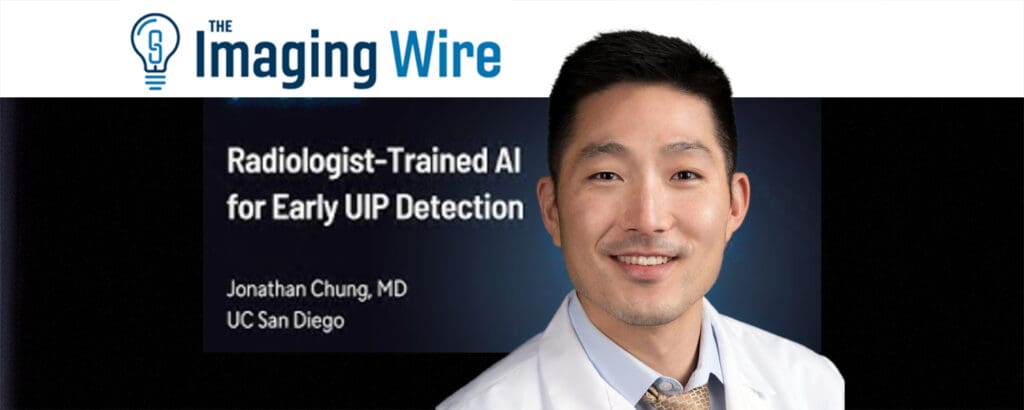
Early identification of Usual Interstitial Pneumonia (UIP) and diagnosis of Idiopathic Pulmonary Fibrosis (IPF) remains a significant challenge in pulmonary medicine. Despite advances in imaging and clinical awareness, the process still requires specialized training and experience that isn’t always readily available—especially in non-urban or resource-limited healthcare settings. This gap can delay diagnosis which critically impacts patient outcomes.
In a recent interview hosted by Brian Casey, editor at The Imaging Wire, Dr. Chung, a leading thoracic radiologist, offers valuable perspective on the complexities associated with UIP identification and the essential role of expert interpretation to achieve accurate diagnoses.
Olympus Launches Emphysema Screening Program Powered by 4DMedical, Expanding Early Diagnosis and Treatment Opportunities

A new peer-reviewed study published in Respiratory Research confirms that 4DMedical’s CT Lung Ventilation Analysis Software (CT LVAS) provides results comparable to those of the gold standard PET method, as well as two additional research techniques for assessing regional lung function. The findings demonstrate a strong association and agreement between 4DMedical’s CT LVAS and PET-ventilation at the lobar level and comparable correlation at the voxel level. Utilizing routine non-contrast CT scans, CT LVAS generates detailed regional ventilation information. This highlights CT LVAS as a safe and contrast-free modality for functional lung imaging, making it an ideal tool for assessing lung function across a range of respiratory conditions.
Partner Spotlight: 4DMedical Featured by OSIC

We’re thrilled to be featured in the latest OSIC Partner Spotlight, where Chuck Hatt, our Vice President of Medical & Clinical Affairs, discusses 4DMedical’s leadership in transforming pulmonary diagnostics. The blog highlights our commitment to advancing lung health through innovative, non-invasive imaging solutions powered by AI, including the FDA-cleared IQ-UIP™ software developed to improve early detection of idiopathic pulmonary fibrosis (IPF).
CT Ventilation Imaging from 4DMedical Shown to Rival Gold Standard PET Scans
A new peer-reviewed study published in Respiratory Research confirms that 4DMedical’s CT Lung Ventilation Analysis Software (CT LVAS) provides results comparable to those of the gold standard PET method, as well as two additional research techniques for assessing regional lung function. The findings demonstrate a strong association and agreement between 4DMedical’s CT LVAS and PET-ventilation at the lobar level and comparable correlation at the voxel level. Utilizing routine non-contrast CT scans, CT LVAS generates detailed regional ventilation information. This highlights CT LVAS as a safe and contrast-free modality for functional lung imaging, making it an ideal tool for assessing lung function across a range of respiratory conditions.
5 Ways to Keep Your Lungs Healthy

Our lungs are hard at work every day, taking in oxygen, filtering out carbon dioxide, and powering every cell in our bodies. Issues with pulmonary health quickly affect our heart, brain, and other major organs. Quality of life can be severely impacted by poor lung health, with individuals no longer able to complete daily tasks without being out of breath, leading to a tremendous loss of independence. As we age, lung capacity naturally declines, and maintaining optimal lung health becomes even more critical. Here are five simple strategies to ensure that you can breathe easily.
Reducing the Burden on Healthcare Systems: The Efficiency of 4D Imaging in Respiratory Medicine

Anyone who has faced a health challenge knows that a diagnosis can take time, often, a lot of time. Studies suggest that the average patient can wait 25 to 1,800 days for a diagnosis, and the National Institutes of Health (NIH) reports that this timeline can extend to four to five years for rare or complex diseases.
Lung diseases are challenging to diagnose, as symptoms develop gradually over many years. For instance, a patient with Chronic Obstructive Pulmonary Disease (COPD) might experience a decade of cough, frequent respiratory infections, and breathlessness during exercise before receiving a formal diagnosis.
AI-Driven CT Innovations from 4DMedical Transform COPD Diagnosis and Patient Care

As COPD continues to grow as a global health burden—predicted by the World Health Organization (WHO) to become the third leading cause of death by 2030—innovative AI-driven medical imaging technologies are rapidly advancing diagnosis, staging, and treatment. In a recent Radiology Today article, “Breathing Room,” writer Beth W. Orenstein explores how clinicians are increasingly relying on advanced CT imaging solutions.